Tuesday, May 5, 2015

The Path of Learning


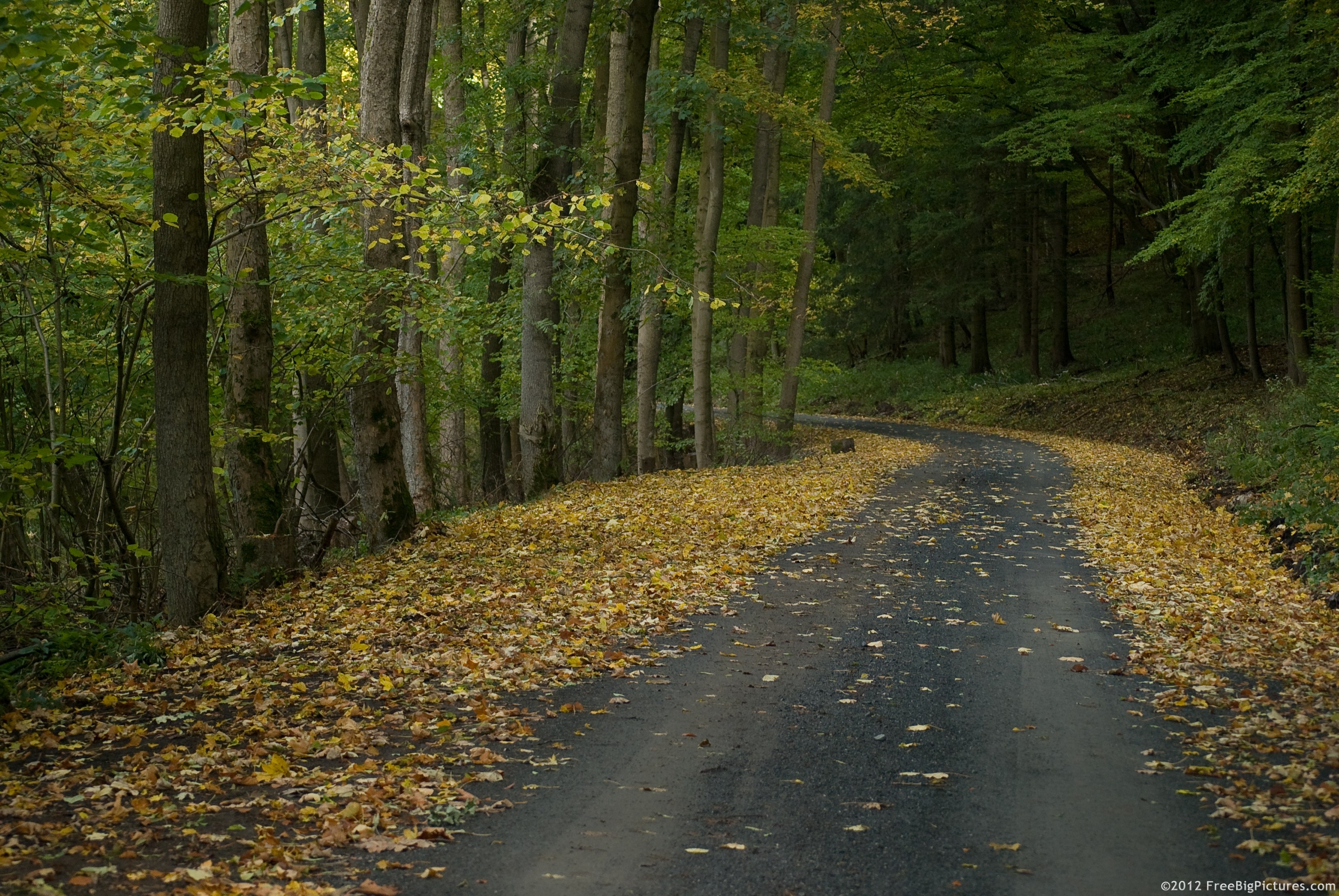
For this final blog post on educational metaphors, it never occurred to me until now, but education is a lot like a path or road (or should be like a path). When one first enters school, which tends to be preschool or kindergarten. They start at one end of the path, the beginning. The one thing that really characterizes paths are the many different things you can see and find along the way. You can also experience a flush of emotions and memories as you travel down the path. Education is a lot like path. As one learns they see and find all sorts of new concepts from learning to count numbers to Shakespeare. Another thing that relates education to a path is that you don't tend to stop on the path. You can stop to examine things along the path, but you never really stop walking on the path until you reach the end. Same goes for education. Education never really stops until you reach the end of your educational career and even then you can still go on to learn more and will continue to learn more everyday on different paths. 

Along the path you may also encounter other people. These people may help, hinder or just ignore you, but you know that they are there. The path of education also has people who may help, hinder or ignore you. Pathways also have shortcuts where you can run through to get ahead. Education also has many shortcuts from skipping grades, being gifted or otherwise. Pathways also have days when they are less traveled because of bad weather or other factors. Education has the same factors. Learning disabilities can hinder the path of education, but never stop the path of education. 

When you think about it. It's impossible not to think of education as one giant metaphorical pathway. Food for thought for this final blog post.


Tuesday, April 28, 2015

Social Justice in the Classroom


Social Justice is an important subject in this day and age. As we continue to evolve from our traditional standards of living, more and more people are concerned with creating a fair and equal society without the threats of stratification. Therefore, social justice has become a very important lesson in the classroom, but many teachers are finding it difficult to integrate lessons of social justice without sounding overly political. Social justice can also be a difficult subject to integrate in schools of conservative communities where traditionalism (which is often plagued by xenophobia) takes precedence. 

How can a teacher integrate principles of social justice such as anti-racism, anti-wealth inequality, a desire for communal sharing and concern for the environment in the most subtle manner? Especially among children.

Many people are aware of the Dr. Seuss book, "The Sneetches". The book opens with two distinct species of creatures. The star belly sneetches and the plain belly sneetches. 
The star belly sneetches feel superior to the plain belly sneetches and treat them poorly because of this. The book, while silly, is actual a subtle lesson in the dangers of racism. Many other Dr. Seuss books offer similar childish outlooks on social issues. There are also tons of other books and lessons similar to Dr. Seuss books that offer subtle approaches to social justice. This pin on Pinterest contains a small collection:
https://www.pinterest.com/saywhatyoumean/children-s-books-for-social-justice/


Tuesday, April 21, 2015

Environmental Education


One of the few things that I remember in public high school was a class pertaining to environmental education. Not only was the teacher very good at introducing the topic and discussing what environmental education means, but the class was also interesting since it was such a foreign concept from writing, reading and math, but at the same time environmental education is just as (if not more) important as writing, reading and math skills. We only have one planet, so we need to know the proper steps and what we can do to save this planet. 

For this blog post, I decided to take a look at the website for the North American Association for Environmental Education, which is one of the largest organizations in the United States that advocates for environmental care and protection through spreading information related to the environment to students. I was specifically interested in their link pertaining to environmental literacy. Literacy means the ability to read and write, so I was naturally curious of how this would apply to environmental education. Environmental literacy is somewhat similar to the ability to read and write, but instead of knowing or having the knowledge to read and write, environmental literacy is understanding and knowing what steps need to be taken to make the environment better. 

The North American Association for Environmental Education defines environmental literacy as: "someone who, both individually and together with others, makes informed decisions concerning the environment; is willing to act on these decisions to improve the well-being of other individuals, societies, and the global environment; and participates in civic life". 


Tuesday, April 14, 2015

The Banking of Education


The conceptual theory of "banking education" can be described as attributing modern education to that of a bank. In which students receive education and learning concepts by the teacher as deposits, but nothing more than that. Education can be seen as information that is stored, but not reflected toward. Coined by Paulo Freire, a Brazilian educator and philosopher, In his essay, titled "Banking Education", Paulo describes modern education as being akin to a form of assimilation. In which students are not encouraged to critically think and should not take ownership upon what they are learning. This results in reinforcing principles of oppression. Paulo describes one solution to this issue with oppressive education through the Problem-posing solution to education in which students are given problems and must solve these problems on their own through the use of prior knowledge. This method would encourage critical thinking and reflection on the task that is being done. Which would likewise, result in an interest from the student to pursue higher educational gains. 

I believe that the concept of banking education is a very real problem in the modern educational system (especially in the West), and a problem that has yet to be resolved. There are others who would agree as well such as educator Gregory Cajete, a Native American (Tewa) and professor from Santa Clara Pueblo, New Mexico. Dr. Gregory's lies in Native American studies and spreading cultural teachings in the classroom. A majority of his emphasis is on health and wellness. He would agree that the modern education system is a serious problem that needs to be addressed by incorporating more critical thinking in the classroom. Introducing new cultures is one way to address the problem of the modern educational system in America. By favoring cultural studies, we present an opportunity for students to think about themselves, their history and their identity and to take ownership of these concepts. While this may not apply so well in the math and sciences, it can be essential in the history and literature departments. 

Tuesday, April 7, 2015

Educational Philosophy


Every person has a method of doing things and every person has a way of thinking. We wouldn't be human if we all thought the same. We'd be more like ants. Which wouldn't be such a bad thing since we'd all be working together for a common purpose as opposed to working against each other to succeed in our own goals. If these first few sentences aren't a hint to my educational philosophy, then I don't know what else is.

In taking an educational philosophy self assessment, it came as no surprise that a majority of my results pointed toward progressivism and humanism. I've always been a very "all of us are different, but all of us should work together" kind of person, and I believe that is what the assessment was attempting to tell me. When it comes to education, I believe that every individual should be allowed to question everything that society presents towards them. In fact, I believe that's really the only way to truly learn, is by questioning reality, society and everything you are told to arrive to a conclusion. 

In our class textbook there was a section on Marxism and education which brought up Hegelian Dialectics. These dialectics largely explain my opinions on how education should be taught. We have the the thesis, everything we are told by teachers, parents, and society. It is the job of the student to develop the antithesis to conflict the thesis. Asking questions. Why is it this way? What is the meaning of what I am learning? Why am I learning it? What is the point? The conclusion produces a synthesis. An answer. After which one can retain what they have learned because they have a different influence in what and why they are learning it. Thesis and antithesis. The conflict between the two should be an inevitable part of our education system, yet we persist with a rigid and standardized system that teaches the what but not the why. 


Monday, March 30, 2015

The Opposite of Inclusion is Exclusion? 


Inclusion is the idea that all students should be able to learn in the same classroom regardless of any form of disabilities. It should go without saying that their are many positives to this such as the ability for students with disabilities such as forming stronger social skills and an increase to self-esteem, but the real question should be in schools. Is inclusion always the best idea for every student with a disability? When the law of the land in schools is always inclusion, would the opposite of that be as blatant as exclusion? 

According to an article by Education World, the opposite of inclusion isn't always exclusion and more importantly inclusion isn't always the best course of action for all students with disabilities. It may even be possible that we are harming our students with disabilities by forcing the concepts of inclusion on them. 

The way inclusion works today is by combining the needs of all students in the classroom without consideration to the individual needs of each student (especially in public schools). Education World references the educator Albert Shanker who wrote for the American Federation of Teachers in 1996 and is quoted stating: 

"What full inclusionists don't see is that children with disabilities are individuals with differing needs; some benefit from inclusion and others do not. Full inclusionists don't see that medically fragile children and children with severe behavioral disorders are more likely to be harmed than helped when they are placed in regular classrooms where teachers do not have the highly specialized training to deal with their needs."

This does not mean that inclusion should be done away with completely. In fact, full inclusion still has it's benefits despite what Shanker states. The way that modern inclusion is conducted is not the correct method though. If a few simple changes are made such as providing adequate support services, reducing classroom size based on the severity of student needs, increased funding towards inclusion programs and professional development for teachers and special educators alike. 

I believe that inclusion can be a very effective method of education, but only after the proper considerations are taken. Regardless, huge strides have been made to improve the plight of special-needs students.


 Cromwell, Sharon. "Inclusion In The Classroom: Has It Gone Too Far?" Education World:. Education World®, 1 Jan. 2004. Web. 30 Mar. 2015.  

Tuesday, March 10, 2015

Multicultural Teaching


Multicultural education is just as important as any other form of teaching. I'm a firm believer that racism stems from both ignorance and fear of the unknown. When one does not understand what is in front of them, they are much more likely to reject it. The same can be said about different cultures. People often display racism and prejudice not because they are bad people, but because they do not understand the culture that another person is coming from. Not only does teaching different cultures in schools, help to deter prejudice, but it's also important in the world we live in now that values understanding as many cultures as possible. Globalization continues to be on the rise and more and more employers are seeking people who understand other cultures (if not speak the language from the other culture themselves).

Even with all this though, often times it seems like multicultural teaching fails to incorporate our own culture, and fails to teach us how similar we are to each other. Often times it seems like multicultural teaching is teaching and celebrating the differences, when we should be celebrating how similar we are as human beings.

Books like "Same, But Different" are children's books that encourage teaching the similarities between cultures and not just the differences. In this way, students can understand how similar they are and effectively eliminate prejudice against others. I mean, why would you want to be prejudice against someone you can relate with?


Tuesday, March 3, 2015

Columbus Day


"America's one of the finest countries anyone ever stole.  ~Bobcat Goldthwaite"

Ahhhh! Columbus Day, one of the many holidays I have a problem with. It's not so much about the celebration, but any educated person knows that Columbus Day has a very very dark history (imagine the Holocaust having a holiday as opposed to a remembrance day). It's only because no one is still alive to know who the real Christopher Columbus was like that we do celebrate the holiday. The problem is, how do you teach about such a dark holiday in an elementary school classroom? Is it fair (or even ethically right?) to teach children lies about a holiday that they will most likely find out the truth about in the future? I mean we do the same thing with other holidays. It seems to be a consistent theme to lie to youth, but I believe that it does serve a purpose and a positive one at that. 

If I can take one thing away from public schooling its that they were good at bringing a positive message to a dark holiday. In the article "What not to teach about Native Americans", the author June Sark Heinrich discusses methods of introducing teaching of Native Americans in the classroom, and especially common errors that teachers make when attempting to teach the subject (the biggest mistake being the term "Indians"). 

The first aspect that Columbus Day teaches us is that Columbus and the natives got along very well (which is very far from the truth), but for a country that prides itself on diversity and being the melting pot of the world, what message does it send to children that we didn't get along so well in the early beginning? This can result in negative reactions in the classroom. Children sometimes need a lie once in awhile to learn a lesson and to teach ethics. So in that regard, I think I can forsake my own ethics for the sake of teaching a lesson to my students. If only to benefit them. Besides, in the future they will likely discover the truth anyway, but if they can go on long enough living the fantasy and believing this country was founded on diversity as much as they believe in Santa and the Easter Bunny, then I think that's a good thing. What ill can come from this? 

The only thing I would make sure to teach is that Columbus didn't discover America, but that he certainly discovered the Native Americans. 


Tuesday, February 17, 2015

Why Teach?


Okay seriously? Who wants to spend 8+ hours a day, sitting in a room (with the occasional bathroom and lunch break), to stand around talking day in and day out about the same old subject? Why teach? What does one gain from doing this? Okay....maybe I was a little cynical. The question still stands though. Why teach?

Maybe the better question is, “why not teach”? For the past week our EDU100 class has been reviewing the deeper meaning behind teaching and the subject of why one should teach in the first place, and when I say, “deeper meaning”. I really do mean, deeper meaning. It’s really not about the money (but it is a concern since teachers are significantly underpaid), nor is it about the ability to simply have a job, nor is it even about the ability to just be in a school. It can be, and this does motivate some people, but overall the general consensus seems to be that teaching is about the chance to inspire someone else. The chance to give another individual someone to look up to and the chance to impact the future.

This Huffington Post article summed up nicely what it means to be a teacher and why one should become a teacher. I think the most important thing I have learned though. Is that as a teacher it’s less about the individual student and more so about what you can do for the student. How can you help this person achieve their full potential and how can you inspire them to become the person they want to see themselves become. It really is a job of sacrifice.  


Monday, February 9, 2015

Who I am


Wouldn't be much of a blog without an introduction, right? My name is Ryan, and I'm a 22 year old senior at Salem State University studying for a Bachelor of Science degree in psychology, the study of cognition and behavior. I'm not actually from Massachusetts. My childhood was spent in Pennsylvania. I came to Massachusetts by myself for school back in 2011. The only pre-educational experience I possess is my work with developmentally disabled adults at a day habitation facility. Our specific workshop in the facility is designed like a classroom setting with activities planned beforehand based around educational skills such as learning math skills, basic reading skills and sensory learning. 

Just a forewarning. This semester, along with this blog and another blog these two will be the first blogs I've ever created. I'm looking forward to learning more about creating effective blogs to help me in the future. While this blog is mostly a product of my EDU100 class, I'm hoping to learn more about the connections between psychology, education, classroom settings and learning in the process. Here is a link related to the subject of education and psychology.